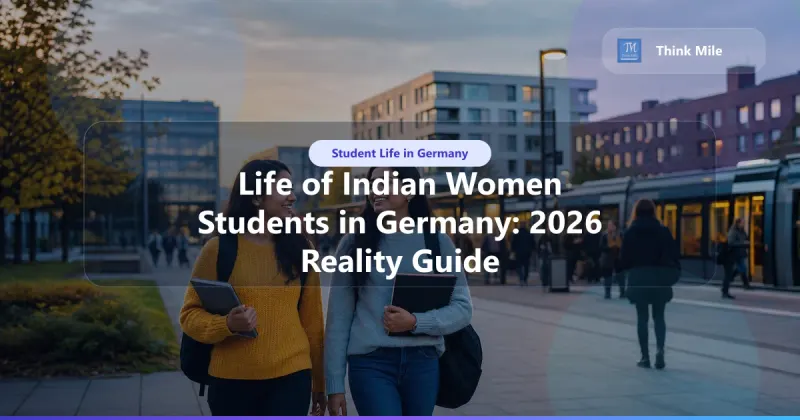
Life of Indian Women Students in Germany: 2026 Reality Guide
Jump to key takeawaysMoving to Germany as an Indian woman can bring academic opportunity and greater independence, but no country or city is uniformly safe, welcoming, or easy to navigate. A useful guide should not promise that harassment is rare, that police always respond well, or that every university has a ready-made Indian women's network.
Your actual experience depends on your city, neighbourhood, housing, transport schedule, programme, workplace, language access, disability, religion, sexuality, skin colour, and support network. The goal is not to make you afraid or falsely reassure you. It is to help you build a plan before a problem occurs.
This article was last reviewed on 11 June 2026.
Also read:
- How Indian students can adapt to life in Germany
- German housing guide
- Mental health and wellbeing guide
Save These Numbers First
| Situation | Contact |
|---|---|
| Immediate police danger | 110 |
| Fire or medical emergency | 112 |
| Urgent medical problem outside normal practice hours, but not life-threatening | 116117 |
| Violence against women helpline | 116 016 |
Swipe horizontally to see more
The federal Violence against Women Helpline provides anonymous, free, round-the-clock advice and can connect callers with local support. It supports people affected by different forms of violence as well as relatives, friends, and professionals. The service offers multilingual help.
Save hilfetelefon.de under a neutral name if privacy on your phone is a concern. In immediate danger, use 110 or 112 rather than waiting for a counselling service.
Build a Personal Safety File
Keep secure digital copies of:
- passport and residence document;
- health-insurance details;
- tenancy contract and handover record;
- university enrolment and emergency contacts;
- medication list and prescriptions;
- a trusted contact in Germany and one outside Germany;
- local police station, hospital, pharmacy, and counselling links;
- bank and phone blocking contacts.
Do not keep the only copy on a phone that could be lost, stolen, monitored, or controlled by another person. Use an account with a password and recovery method that only you control.
Assess a Location, Not a Country
National crime rankings do not tell you whether a particular route, station, residence, or workplace is appropriate for you.
Before signing housing or accepting a late shift, check:
- the door-to-door route at the actual travel time;
- the final walk from the stop;
- service frequency and last departure;
- planned engineering work and replacement buses;
- lighting, open businesses, and alternative routes;
- taxi availability and approximate cost;
- whether the building entrance and room lock work;
- who can access shared areas;
- the local emergency and reporting options.
Visit the area in person where possible. A neighbourhood can feel different at 2 PM and 11 PM.
Night Transport: Verify the Exact Journey
Night services vary by city, route, day, public holiday, and disruption. Do not rely on a static table claiming that a city's trains or buses run all night.
Before going out:
- check the local transport operator's live journey planner;
- confirm the return journey, not only the outward route;
- note the last regular service and any night-bus alternative;
- charge your phone and carry a payment fallback;
- wait in a visible area near other passengers when possible;
- move carriage or leave at a staffed, busy stop if another passenger concerns you;
- call 110 when there is an immediate threat.
The regular Deutschlandticket costs EUR 63 per month in 2026, but university ticket arrangements differ and the ticket does not guarantee that a route operates at night. Check the local timetable and your university's current transport arrangement.
Ride-hailing and taxi providers do not operate uniformly across Germany. Verify availability in your city instead of treating a named app as a nationwide safety plan.
Housing: Control the Contract and Access
There is no general requirement to arrive before arranging long-term housing, and legitimate student housing can sometimes be contracted from abroad. The safer approach is to verify the provider, contract, payment request, room, and registration conditions.
Before paying
- verify the landlord or residence provider;
- see the room in person or through a live, credible viewing;
- read the tenancy contract;
- confirm the exact address, room, rent, deposit, utilities, start date, and notice period;
- confirm whether address registration is possible;
- use a traceable payment method;
- never let urgency override a scam warning.
Read the complete German housing guide for contract and fraud checks.
Shared-flat checks
Ask potential flatmates:
- Who lives there and how long have they lived there?
- Who holds the main contract?
- How are guests and overnight visitors handled?
- Do bedroom doors lock?
- How are cleaning, noise, smoking, alcohol, and shared purchases handled?
- Are there cameras or smart devices in shared areas?
- What happens when a flatmate moves out?
A women-only WG may suit you, but it is not automatically safe or compatible. A mixed WG is not automatically unsafe. Assess the people, boundaries, contract, and physical access.
After moving in
- photograph the room and defects during handover;
- test the entrance and bedroom locks;
- learn who has keys;
- keep emergency exits clear;
- do not share passport or residence-document copies without a legitimate purpose;
- report a broken lock or unauthorised entry in writing.
Women-only dormitories, women-only floors, reception, or security staff are local features, not standard German student-housing guarantees. Check the responsible Studierendenwerk or provider.
Harassment, Stalking, and Violence
Harassment is not made acceptable by calling it cultural directness, flirting, alcohol, or a misunderstanding.
If something happens
Prioritise immediate safety:
- Move to a safer or public place if you can.
- Call 110 for police danger or 112 for a medical emergency.
- Contact 116 016 for confidential specialist guidance.
- Tell a trusted person.
- Obtain medical care when needed.
- Preserve information if it is safe to do so.
Possible records include:
- dates, times, locations, and exact conduct;
- screenshots, emails, call logs, and voice messages;
- usernames, profile links, vehicle details, or descriptions;
- witness names;
- photographs of damage or injury;
- reports made to housing, university, employer, platform, or police.
Do not confront a person alone merely to obtain evidence. Safety takes priority.
Digital abuse
Warning signs include:
- demands for passwords or live location;
- account login alerts you cannot explain;
- threats involving private images;
- repeated contact through new accounts;
- tracking devices or unknown shared-account access;
- control of your phone contract, bank access, or documents.
Use a safe device to change passwords and recovery details. Review active sessions, shared cloud albums, location sharing, and connected devices. Specialist counselling can help you plan without alerting the person monitoring you.
Sexual violence
You are not responsible for violence because of what you wore, drank, said, or previously agreed to. Consent to one act or at one time is not consent to everything.
Medical, forensic, police, and confidential evidence-preservation options differ locally. The 116 016 helpline can direct you to appropriate nearby services. Seek urgent medical care for injury, pregnancy concerns, or possible exposure to infection.
Discrimination and Racism
Indian women can face overlapping discrimination based on gender, ethnic origin, religion, disability, age, or sexual identity. Do not reduce every incident to either "racism" or "German bluntness"; document the actual conduct and context.
Preserve:
- the advertisement, rule, or selection criteria;
- emails and messages;
- names and dates;
- witnesses;
- comparable treatment of others where known;
- the outcome you requested;
- complaint, appeal, or legal deadlines.
Possible contacts include:
- university equality or anti-discrimination office;
- programme or examination complaints route;
- AStA, StuRa, or other student representation;
- employer HR, complaints office, works council, or union;
- tenant counselling;
- specialist local anti-discrimination advice;
- the Federal Anti-Discrimination Agency.
The Federal Anti-Discrimination Agency can provide a legal assessment within its remit, but it does not replace emergency support, individual legal representation, or action before a deadline. Protection also differs by area: employment, housing, university decisions, and official authorities do not all follow the same complaint route.
Healthcare: Verify Coverage Before Treatment
German health insurance does not mean every treatment, medicine, contraception method, screening, translation service, or private appointment is automatically free.
Before non-emergency treatment, ask:
- Is the practice accepting new patients?
- Does it accept statutory insurance, private insurance, or both?
- Is a referral required?
- Is this treatment covered?
- Will there be a co-payment or private invoice?
- What language can the consultation use?
- Can I request a female clinician, and is one available?
- What should I bring?
For non-life-threatening urgent care outside regular hours, use 116117 and the official doctor-search options. For emergencies, call 112.
Read the student health-insurance guide for enrolment and insurance distinctions.
Gynaecological care
You can contact a gynaecology practice directly in many cases, but acceptance, waiting times, languages, and coverage vary. Search for Frauenarzt or Frauenärztin and verify the practice's insurance and appointment rules.
Do not rely on a blog's fixed screening schedule. Preventive entitlements depend on age, medical history, insurer, and current programme rules. Ask the practice or insurer what applies to you.
Contraception and sexual health
Contraception access and cost depend on the method, age, prescription, medical indication, and insurance status.
The official gesund.bund.de emergency-contraception guide states that the morning-after pill is available from pharmacies without a prescription. It is time-sensitive, so seek pharmacy or medical advice promptly. Emergency pharmacies operate outside normal hours.
For verified information about sexual health, safer sex, HIV, other sexually transmitted infections, sexual orientation, and gender identity, use the Federal Institute of Public Health's LIEBESLEBEN portal.
Confidentiality, testing, treatment, and cost can differ by service. Ask before booking.
Medication from India
Do not bring a generic "three-month supply" based on blog advice. Medicine-import rules depend on the product, controlled substances, quantity, personal need, and documentation. Carry medicines in original packaging and check current official rules before travel. The pre-departure checklist covers the wider import checks.
Mental Health and Isolation
There is no predictable month when loneliness peaks and no guarantee that it disappears after one semester.
Build more than one support route:
- a trusted person in Germany;
- family or friends outside Germany;
- programme or International Office contact;
- local Studierendenwerk counselling;
- a doctor;
- a recurring social activity;
- specialist support relevant to your identity or experience.
Deutsches Studierendenwerk lists psychological counselling services at many student-service organisations. Language, eligibility, cost, capacity, and waiting time vary locally.
Seek help promptly if sleep, appetite, concentration, hygiene, attendance, substance use, panic, hopelessness, or isolation is worsening. Use 112 during an immediate crisis or danger.
Community Without False Guarantees
Not every university has an Indian Students Association, women-specific group, buddy programme, temple, English-speaking counsellor, or active WhatsApp community.
Check:
- university International Office;
- recognised student organisations;
- AStA or StuRa;
- local Studierendenwerk;
- language centre and tandem programmes;
- university sports;
- professional or subject-specific groups;
- cultural, religious, LGBTQ+, disability, or women's organisations;
- volunteering and local associations.
Verify whether a group is current and recognised before sharing personal documents, travel details, or money. Informal groups can be useful but are not substitutes for professional medical, legal, or violence-support services.
The making-friends guide provides a structured social plan.
Dating, Consent, and Boundaries
There is no single German dating culture. Bill splitting, exclusivity, communication, alcohol use, and relationship pace vary by person.
Discuss rather than assume:
- whether a meeting is a date;
- payment expectations;
- consent and contraception;
- exclusivity;
- privacy and photographs;
- communication frequency;
- location sharing;
- meeting friends or family;
- living arrangements.
For a first meeting with someone you do not know:
- meet in a public place;
- control your transport home;
- tell a trusted person where you are if that helps you;
- keep your phone and documents under your control;
- do not let politeness override a boundary;
- leave when you want to.
Relationship abuse can include monitoring, threats, isolation, financial control, sexual coercion, document control, and immigration threats. Contact 116 016 for specialist guidance.
Work and Career
Gender does not change student immigration work limits. For many third-country students, the current framework is 140 full or 280 half working days per calendar year, with separate rules and exceptions for some activities. Social-insurance and study-status rules are separate.
Use the part-time jobs guide and check your residence document and the responsible authority for your case.
Do not rely on claims that:
- Germany has a general STEM shortage;
- being a woman creates a hiring advantage;
- technical workplaces are automatically meritocratic;
- a diversity initiative predicts an offer;
- every employer has an effective harassment process.
Evaluate actual vacancies:
- required language;
- salary and working hours;
- shift location and late transport;
- contract type;
- immigration compatibility;
- team and customer contact;
- reporting line;
- probation and notice;
- harassment and complaints process.
Workplace harassment or discrimination
Document the conduct, report through an appropriate safe channel, and check deadlines. Depending on the situation, contacts may include the employer complaints office, works council, union, Federal Anti-Discrimination Agency, specialist counselling, lawyer, or police.
Do not secretly record conversations without legal advice. German recording and privacy rules can create additional legal problems.
Family Communication Without Surveillance
Family concern can be genuine, but your safety plan should not require surrendering all privacy or allowing continuous monitoring.
Agree on:
- a realistic call schedule;
- what counts as a missed-check-in concern;
- who should be contacted locally;
- when family should call emergency services;
- which address and insurance details they need;
- what information remains private.
Share concrete evidence such as the tenancy provider, university contact, and transport route. Do not promise that nothing can happen. Explain the response plan if something does.
If family pressure becomes coercive, threatening, or financially controlling, seek confidential counselling before making a confrontation plan.
Clothing, Religion, and Identity
There is no guarantee that nobody will stare, comment, stereotype, or discriminate. You can wear Indian clothing, religious clothing, or other clothing subject to applicable rules for specific laboratories, workplaces, sports, or safety contexts.
Practical checks include:
- laboratory or workshop protective equipment;
- workplace dress and hygiene rules;
- winter warmth and footwear;
- swimming or sports requirements;
- passport and residence-document photo rules.
You do not owe strangers explanations about marriage, caste, religion, food, clothing, sexuality, or family planning. A simple response is: "I prefer not to discuss that."
Hair, Skin, and Personal-Care Claims
Changes in hair or skin can have many causes, including climate, products, stress, nutrition, hormones, illness, and water characteristics. Do not treat a shower filter, vinegar rinse, supplement, or social-media routine as a diagnosis or guaranteed treatment.
If hair loss, scalp symptoms, skin changes, pain, or menstrual changes are persistent or concerning, contact a doctor. Check insurance coverage before non-medical cosmetic treatment.
Drugstores and supermarkets stock period and personal-care products, but brand, absorbency, ingredients, price, and availability vary. Carry enough for your first days if you require a specific product, then test local options.
A First-Month Plan
Before arrival
- Save emergency and helpline numbers.
- Verify housing and registration eligibility.
- Check the night route from campus to the accommodation.
- Identify your insurer and nearby medical services.
- Keep independent access to money, email, phone, and documents.
First 72 hours
- Test locks and document the room condition.
- Learn the building exit and local route.
- Buy a local SIM or confirm reliable connectivity.
- Save the local transport app and offline address.
- Tell one trusted person you arrived.
First week
- Visit orientation and confirm support contacts.
- Check the live late-evening route.
- Register with or identify a primary-care and gynaecology option before an urgent need.
- Join one recurring academic or social setting.
- Review account security and location-sharing settings.
Weeks two to four
- Reassess whether the housing and route feel workable.
- Build a small emergency cash and transport buffer.
- Practise explaining your address and medical needs in German or in writing.
- Record any repeated discrimination or boundary problem early.
- Contact support before isolation or distress becomes a crisis.
Quick Response Matrix
| Situation | First action |
|---|---|
| Immediate threat | Move to safety and call 110 |
| Medical emergency | Call 112 |
| Urgent, non-life-threatening medical issue | Call 116117 |
| Violence, stalking, coercion, or safety planning | Contact 116 016 |
| Workplace discrimination or sexual harassment | Preserve evidence and check employer/FADA advice routes |
| University discrimination or procedural problem | Preserve documents and contact the correct complaints or equality route |
| Housing scam or unauthorised access | Do not transfer more money; preserve evidence and seek housing/legal advice |
| Lost phone or documents | Secure accounts, block services, report documents where required |
| Worsening mental-health functioning | Contact counselling or a doctor; use emergency help for immediate danger |
Swipe horizontally to see more
Frequently Asked Questions
Is Germany safe for Indian women?
No country-wide yes or no can replace a location and situation assessment. Many women live independently in Germany, but harassment, violence, theft, racism, and unsafe relationships also occur. Evaluate your housing, route, workplace, support network, and response options.
Are small university towns safer than large cities?
Not automatically. Smaller places may have shorter routes but less frequent night transport or fewer specialist services. Large cities may offer more transport and counselling options but have busier nightlife and neighbourhood variation. Compare the exact address and routine.
Can I find women-only accommodation?
Some providers offer women-only rooms, flats, floors, or residences, but availability is local and limited. Verify the provider and contract. Women-only housing is a preference option, not proof of safety.
Will police take my complaint seriously?
A blog cannot guarantee an individual response. In immediate danger call 110. Preserve details, ask for language support if needed, and use a specialist service such as 116 016 for guidance and local referrals.
Can I request a female doctor?
You can ask and search for a female clinician, but availability and waiting time vary. For urgent or emergency treatment, delaying care may create risk. Ask the service what options are available.
Is university counselling free and available in English?
Many Studierendenwerke and universities offer student counselling, often without a standard consultation fee, but language, eligibility, charges, and waiting times differ. Check the local service directly.
Will I face racism or sexism?
You may. Experiences vary, and discrimination can be overt or subtle. Preserve evidence, identify the correct complaint route, and obtain specialist advice before deadlines expire.
Can my employer restrict what I wear?
Employers can have role-specific dress, hygiene, identification, or safety rules, but discriminatory treatment may be unlawful. Ask for the written rule and seek advice if it appears selectively or unfairly applied.
What if a partner controls my documents or threatens my residence status?
Use a safe device and contact 116 016 for confidential safety planning and local support. Call 110 in immediate danger. Do not assume the partner's statements about immigration law are accurate.
What should I share with my family?
Share enough for a useful emergency plan: address, university, insurance, and a local contact. Decide your normal check-in schedule and escalation steps. You do not have to provide continuous location access to prove that you are responsible.
Key Takeaways
- Assess exact housing, routes, shifts, and people instead of relying on country rankings.
- Save 110, 112, 116117, and 116 016 before arrival.
- Keep independent control of documents, money, phone, email, and recovery accounts.
- Verify healthcare coverage, language, and cost before non-emergency treatment.
- Document harassment, stalking, discrimination, and housing problems early.
- Treat informal communities as social support, not professional legal or medical services.
- Use the current 140/280 student-work framework, not the obsolete 120/240 rule.
- Do not accept stereotypes, surveillance, or coercion as the price of studying abroad.
Use the first-week arrival guide, Cost Calculator, and AI University Finder to connect this safety plan to your actual city, housing budget, and programme.
Official Sources
This article was reviewed against the federal Violence against Women Helpline, the Federal Ministry of Health's emergency-contraception guidance and emergency numbers, the Federal Institute of Public Health's LIEBESLEBEN sexual-health portal, the Federal Anti-Discrimination Agency advice service, the Deutsches Studierendenwerk psychological-counselling directory, the Federal Government's Deutschlandticket guidance, and current federal student-work guidance linked in the site's part-time jobs article.
Transport, housing, healthcare, counselling, and university services differ locally. Verify current information for your city, insurer, university, residence document, and individual circumstances.
Planning your own application? Read our full guide: How to study in Germany from India
Free 15-minute call
Have a question about your Germany application?
Get honest, personalised guidance — no sales pitch, no package pressure. Just Ankit answering your specific question.
We earn nothing from universities. Ever.
What happens next
- 1
Send your message
No forms, no booking links — just one WhatsApp message describing your situation.
- 2
Ankit replies personally
Not a call centre. Ankit reads it himself and replies within 24 hours.
- 3
One honest conversation
Realistic profile fit, actual university options, zero sales pressure.
Ankit Jaiswal · Manager, Think Mile · guiding the Think Mile team, which has guided 500+ Indian students since 2018
Free email guide
Germany Application Master Checklist 2026
10-step checklist + every free tool linked, delivered to your inbox.
No spam. Unsubscribe any time.
Related Articles
Continue reading about Student Life in Germany