Master's Programme Guide
MSc Automotive Engineering in Germany for Indian Students
Free tuition at world-class universities. BMW, Mercedes-Benz, Bosch on your doorstep. Here's exactly how to get in.
Tuition varies by university and citizenshipfree at most public universities; non-EU fees apply in some states
On this page
Tuition
€0 in most German states; TUM charges €4,000–€6,000/sem for non-EU (varies by programme); KIT and Stuttgart charge €1,500/sem for non-EU
Duration
2 years (4 semesters)
Language
IELTS 6.5+ for English-medium; B2/C1 German for German-medium tracks
CGPA Range
7.0–8.5 / 10 (varies by university)
IELTS
6.5 overall (7.0 for TUM & RWTH Aachen)
Top 8 Public Universities for MSc Automotive Engineering in Germany
Click any column header to sort. All listed universities are public. Tuition is free in most German states. Baden-Württemberg charges €1,500/semester for non-EU master's students. Bavaria has no single uniform rate: TUM charges €4,000–€6,000/semester for non-EU master's degrees; other Bavarian universities vary. Semester contributions cover student union, public transport ticket, and admin fees.
| Website | |||||
|---|---|---|---|---|---|
| RWTH Aachen University | Aachen | €0 + ~€300 semester contribution | German (B2/C1 required) | May 15 (Winter Semester) | Visit |
| KIT – Karlsruhe Institute of Technology | Karlsruhe | €1,500/sem for non-EU + ~€170 semester contribution | German (select English tracks available) | May 15 (Winter Semester) | Visit |
| TU Braunschweig | Braunschweig | €0 + ~€380 semester contribution | English (Automotive Eng.) / German | May 15 (Winter Semester) | Visit |
| Technical University of Munich (TUM) | Munich | €4,000–€6,000/sem for non-EU (varies by programme) + ~€144 semester fee | German / English (check programme) | May 31 (Winter Semester) | Visit |
| TU Darmstadt | Darmstadt | €0 + ~€295 semester contribution | English & German | May 31 (Winter Semester) | Visit |
| University of Paderborn | Paderborn | €0 + ~€300 semester contribution | English | June 15 (Winter Semester) | Visit |
| TU Chemnitz | Chemnitz | €0 + ~€268 semester contribution | English | June 30 (Winter Semester) | Visit |
| University of Stuttgart | Stuttgart | €1,500/sem for non-EU + ~€190 semester contribution | German / English (INFOTECH track) | July 15 (Winter Semester) | Visit |
← Scroll horizontally to see all columns
Deadlines and semester contributions are approximate and subject to change, always verify on the official university website before applying.
Typical Eligibility for Indian Students
- 1Bachelor's in Mechanical, Automotive, Aerospace, Electrical, or Mechatronics Engineering — minimum 60% aggregate or 7.0/10 CGPA (German equivalent ~2.5 on the 1–5 scale)
- 2TUM requires IELTS 7.0 overall for most graduate programmes; RWTH Aachen requires 6.5; TOEFL iBT 90+ is accepted by most programmes as an alternative
- 3The Deutschlandstipendium (€300/month, no national quota) is available at all major German universities — apply directly to the university in the first semester after enrolment. Budget separately for the blocked account (Sperrkonto): €11,904/year (€992/month) required for the German student visa.
- 4Maximum 2–3 active backlogs tolerated; core engineering semester results carry significantly higher weight than elective subjects in the evaluation
- 5APS Certificate is mandatory for all Indian applicants — submit your APS application at least 3–4 months before your university application deadline; APS India processes applications through online registration and document courier submission, not bookable appointment slots; verification typically takes 4–8 weeks (8–12 weeks end-to-end)
Career & Salary After Graduation
Average Starting Salary
€45,000–€65,000 / year (entry-level, Germany)
Top Recruiters
BMWMercedes-BenzVolkswagen GroupBoschContinentalZF FriedrichshafenPorscheAudiSiemensAptivHarman
Job Seeker Visa
18-month job seeker visa (§20 AufenthG) — lets you stay in Germany and job hunt after graduation before needing an employment-based residence permit
Why MSc Automotive Engineering?
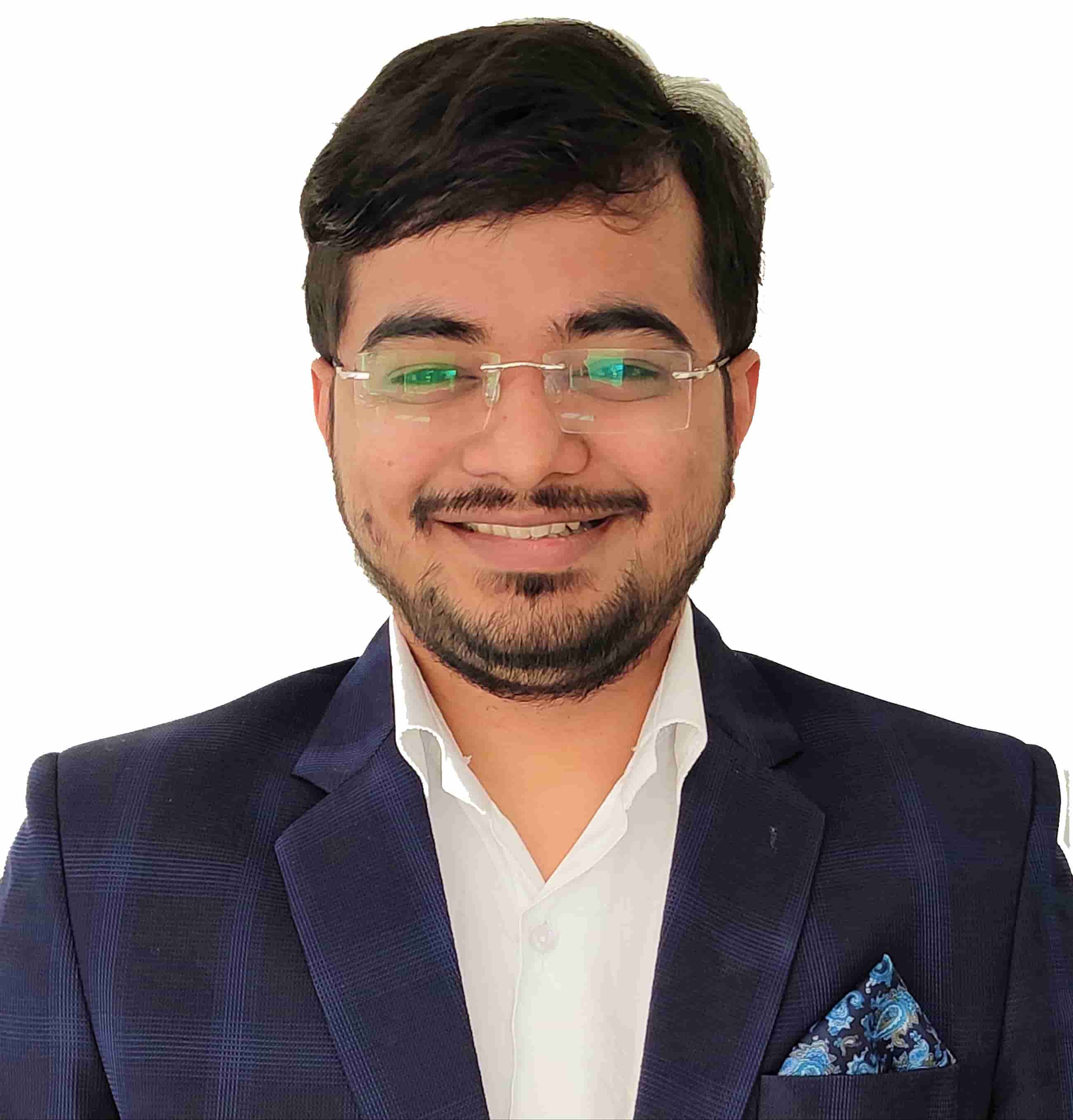
Ankit Jaiswal
Founder, Think Mile · guided 500+ Indian students
Germany's automotive cluster is unmatched anywhere in the world. BMW, Mercedes-Benz, VW, Bosch, and Continental all have major R&D centres within an hour of the universities I recommend. Students I've placed at TU Chemnitz and RWTH Aachen have landed internships at these exact companies during their third semester — not because they were especially lucky, but because the curriculum is co-designed with industry and professors often consult directly for OEMs. You are not studying near the industry; you are studying inside it.
The English-medium shift over the last five years is a genuine advantage for Indian students. You no longer need B2-level German just to enrol. TU Chemnitz's Automotive Software Engineering and Paderborn's Automotive & Mechatronics Engineering are entirely in English — both have active DAAD scholarship pipelines too. Samiksha, one of the students I guided to TU Chemnitz, received the STIBET scholarship of €500/month on top of zero-tuition admission. The money she saved compared to what other consultancies had quoted her for private universities was over ₹10 lakhs.
My own academic background is in embedded systems, computer vision, and machine learning — the three areas that now sit at the core of modern automotive software (ADAS, autonomous driving, V2X communication). I know which professors are publishing in IEEE Transactions, which labs have active OEM partnerships, and which universities will give you a meaningful industry placement versus a theoretical dead-end. When I recommend a programme for your profile, it is not generic shortlisting. It is based on where I have seen Indian students actually succeed.
Common Mistakes Indian Applicants Make
Applying to RWTH Aachen and TU Munich's main Automotive Engineering tracks without checking the language of instruction — most core programmes at these two universities require B2/C1 German proficiency, not just an IELTS score. Many Indian students waste an entire application cycle on programmes they are linguistically ineligible for.
Applying with "passion for cars" as the motivation instead of a specific technical specialisation. Automotive Engineering in Germany splits into powertrain, vehicle dynamics, ADAS/autonomous, production, and automotive software — each with distinct faculty and labs. An SOP that does not name one specialisation reads as unfocused and rarely makes the shortlist.
Submitting a generic Statement of Purpose that reads like a job application or a list of undergraduate projects. German professors read SOPs and reject vague motivation letters. The differentiator between a shortlisted and a rejected application is usually a sentence that names a specific research group, cites a recent paper from the lab, or references a project at that exact university.
A Student Who Did It
S
“Other consultants were recommending expensive private universities that would’ve cost me lakhs more.”
“Other consultancies were pushing me towards expensive private universities. Think Mile guided me to TU Chemnitz — a tuition-free public university! I also received the STIBET scholarship of €500/month. Saved lakhs in fees!”
Samiksha·TU Chemnitz·MS Automotive Software Engineering
STIBET Scholarship + ₹10L Saved vs Private
Read Next
Applying for this programme?
Book a free call, I've placed students in exactly this field.
I review profiles, help you shortlist the right 5–6 universities for your specific CGPA and background, and personally guide your SOP to avoid the mistakes I've seen reject hundreds of applications. No sales pitch, one honest conversation about your chances.