Master's Programme Guide
MSc Artificial Intelligence in Germany for Indian Students
Tübingen's MSc Machine Learning is one of Germany's strongest AI research programmes, yet it barely appears on Indian applicants' shortlists. This guide covers what the AI university shortlists don't tell you.
Tuition varies by university and citizenshipfree at most public universities; non-EU fees apply in some states
On this page
Tuition
€0 at most public universities; TUM charges €4,000–€6,000/sem for non-EU (varies by programme); Saarland and Bonn are tuition-free; Baden-Württemberg universities (Tübingen, Freiburg, Heidelberg) charge €1,500/sem for non-EU
Duration
2 years (4 semesters)
Language
English-medium across all top AI programmes; B2 German not required for admission but significantly accelerates visa and integration
CGPA Range
7.5–9.0 / 10 (TUM Informatics and Tübingen Machine Learning highly competitive; Saarland and Freiburg accessible at 7.5+ with strong mathematics background)
IELTS
6.5–7.0 overall; TUM and Tübingen require IELTS 7.0; Saarland and Freiburg accept 6.5
Top 7 Public Universities for MSc Artificial Intelligence in Germany
Click any column header to sort. All listed universities are public. Tuition is free in most German states. Baden-Württemberg charges €1,500/semester for non-EU master's students. Bavaria has no single uniform rate: TUM charges €4,000–€6,000/semester for non-EU master's degrees; other Bavarian universities vary. Semester contributions cover student union, public transport ticket, and admin fees.
| Website | |||||
|---|---|---|---|---|---|
| University of Tübingen, MSc Machine Learning | Tübingen | €1,500/sem for non-EU + ~€215 semester contribution | English | April 30 (Winter Semester) | Visit |
| Saarland University, MSc Computer Science (AI specialisation) | Saarbrücken | €0 + ~€270 semester contribution | English | May 15 (Winter Semester) | Visit |
| University of Freiburg, MSc Computer Science (AI track) | Freiburg | €1,500/sem for non-EU + ~€165 semester contribution | English | May 15 (Winter Semester) | Visit |
| University of Bonn, MSc Computer Science (LAMARR AI Institute) | Bonn | €0 + ~€290 semester contribution | English | May 15 (Winter Semester) | Visit |
| Heidelberg University, MSc Data and Computer Science | Heidelberg | €1,500/sem for non-EU + ~€190 semester contribution | English | May 15 (Winter Semester) | Visit |
| TU Munich, MSc Informatics (AI track) | Munich | €4,000–€6,000/sem for non-EU (varies by programme) + ~€144 semester fee | English | May 31 (Winter Semester) | Visit |
| TU Berlin, MSc Computer Science (AI track) | Berlin | €0 + ~€310 semester contribution | English | July 15 (Winter Semester) | Visit |
← Scroll horizontally to see all columns
Deadlines and semester contributions are approximate and subject to change, always verify on the official university website before applying.
Typical Eligibility for Indian Students
- 1Bachelor in Computer Science, Mathematics, or Electrical Engineering with strong mathematical foundations: linear algebra, probability theory, and multivariate calculus are the primary evaluation filters; a 7.5+ CGPA in a CS degree matters less than demonstrated mathematical depth; Saarland and Freiburg are accessible at 7.5+ with strong maths backgrounds
- 2IELTS 6.5–7.0 overall; TUM and the University of Tübingen both require IELTS 7.0 for their AI/ML programmes; Saarland and Freiburg accept 6.5
- 3The Deutschlandstipendium (€300/month, no national quota) is available at all major German universities, apply directly to the university in the first semester after enrolment. Budget separately for the blocked account (Sperrkonto): €11,904/year (€992/month) required for the German student visa.
- 4Programming proficiency in Python required at all programmes; familiarity with PyTorch or TensorFlow and a working understanding of gradient descent, backpropagation, and Bayesian inference is expected: formal coursework in machine learning, statistics, or computer vision is a concrete differentiator over self-taught skills
- 5APS Certificate mandatory for all Indian applicants; submit your APS application at least 3-4 months before your university application deadline; processing takes 8-12 weeks, for Tübingen's Winter Semester deadline of April 30, submit APS by January at the latest
Career & Salary After Graduation
Average Starting Salary
€50,000–€80,000 / year (entry-level, Germany); research-track roles at Google DeepMind Munich and Apple Munich command €65,000–€80,000; applied AI at Bosch, SAP, and VW Group AI Lab typically starts at €50,000–€65,000
Top Recruiters
Google DeepMind MunichApple MunichAmazon Science BerlinAleph Alpha (Heidelberg)VW Group AI LabBMW AI LabBosch AI CentreSAP AI/MLSiemens AI LabMPI Intelligent Systems (Tübingen)
Job Seeker Visa
18-month job seeker visa (§20 AufenthG); AI and machine learning specialists may qualify for the EU Blue Card if they secure a qualifying job offer at or above the shortage-occupation salary threshold (~€45,934/year in 2026) and their degree is formally recognised, a degree alone does not qualify; Blue Card can lead to permanent residence in 21 months with B1 German, subject to all conditions being met
Why MSc Artificial Intelligence?
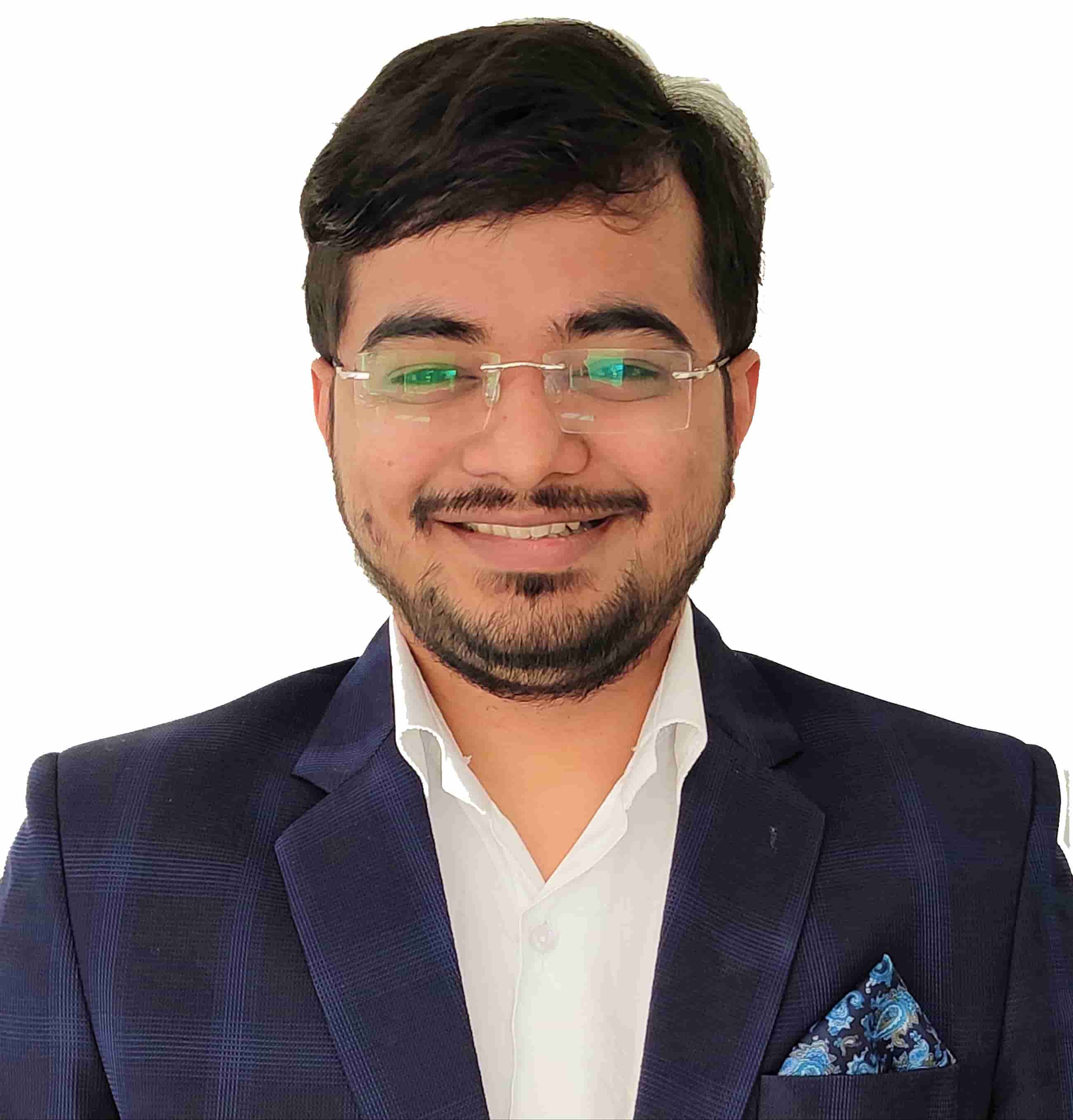
Ankit Jaiswal
Founder, Think Mile · guided 500+ Indian students
The University of Tübingen's MSc Machine Learning sits inside the Cyber Valley: a Stuttgart-Tübingen AI ecosystem co-funded by Bosch, Daimler, Amazon, and Porsche, and houses the Max Planck Institute for Intelligent Systems, one of the highest-citation AI research centres in Europe. Despite this, Tübingen rarely appears on Indian applicants' shortlists. The programme is not a safety option: it is a research-track degree that Microsoft, Apple, and Google recruit from directly, with an April 30 non-EU application deadline for Winter Semester intake and an IELTS 7.0 minimum, a bar that filters out applicants who treat it as a fallback. As a Baden-Württemberg state university, it also charges €1,500/semester for non-EU students, which is worth factoring into the budget alongside the blocked account.
Germany's academic AI infrastructure is more concentrated than it appears from outside. The Munich Center for Machine Learning (MCML) is a joint research centre of LMU Munich and TU Munich, with a portfolio of applied projects funded by BMW, Siemens, and the German federal government. Saarland University's DFKI campus, the German Research Centre for Artificial Intelligence: is one of the largest AI research centres in the world by staff count and runs applied projects in NLP, robotics, and computer vision that regularly become thesis placements. The University of Bonn's LAMARR Institute focuses on trustworthy AI and has direct ties to the Fraunhofer Institute. For a research-track applicant from India, these institutional ecosystems are more important than programme rankings: they are where the thesis supervision, publication pipeline, and first-job referrals actually originate.
This guide covers a different audience than the Data Science and AI guide elsewhere on this site. That guide is for analytics professionals upskilling to apply ML in industry. This guide is for CS, Mathematics, and EE graduates who want to build models, not deploy them, who are comfortable with the proof of the universal approximation theorem and want to contribute to foundational research or frontier applications. The admission bar is different: TUM Informatics AI tracks and Tübingen Machine Learning are research programmes with prerequisite checks. A well-constructed SOP for a Tübingen application names specific papers from the Empirical Inference Department or the Machine Learning in Science group and explains what the applicant found technically interesting. A generic 'I am passionate about artificial intelligence' statement gets filtered in the first round, regardless of CGPA.
Common Mistakes Indian Applicants Make
Underestimating Tübingen's admission bar, the MSc Machine Learning has an April 30 deadline for Winter Semester and requires IELTS 7.0; it is research-track competitive with TUM, not a fallback option; non-EU students also pay €1,500/semester as a Baden-Württemberg state university
Conflating the Data Science/AI guide audience with this one: German AI research programmes at Tübingen, TUM, and Saarland target CS/Math graduates with strong theoretical foundations; applied analytics professionals are better served by MSc Data Science programmes; applying to the wrong tier leads to academic difficulty and rejection
Writing a generic SOP without referencing specific research groups: TUM, Tübingen, and Saarland faculty evaluate whether applicants have read actual published work from their groups; a statement that doesn't mention a specific paper, method, or lab direction is indistinguishable from a template
A Student Who Did It
S
“Think Mile’s end-to-end support was amazing. From university selection to visa to finding accommodation — they were there at every step. Their mentorship also helped me land a student job at the company!”
Shreyas Talole·HFT Stuttgart·MS Software Technology
Student Job at Company
Read Next
Applying for this programme?
Book a free call, I've placed students in exactly this field.
I review profiles, help you shortlist the right 5–6 universities for your specific CGPA and background, and personally guide your SOP to avoid the mistakes I've seen reject hundreds of applications. No sales pitch, one honest conversation about your chances.