Master's Programme Guide
MSc Electrical Engineering in Germany for Indian Students
Siemens, Bosch, Infineon, OSRAM, Germany’s electrical engineering industry hires from these exact universities. Free tuition in most states.
Tuition varies by university and citizenshipfree at most public universities; non-EU fees apply in some states
On this page
Tuition
€0 in most German states; TUM charges €4,000–€6,000/semester for non-EU students (varies by programme); KIT charges €1,500/semester
Duration
2 years (4 semesters)
Language
IELTS 6.5+ for English-medium tracks; B2/C1 German required for most RWTH, TUM, and KIT programmes
CGPA Range
7.0–8.5 / 10 (core modules: circuits, signals, electromagnetics, scrutinised heavily)
IELTS
6.5 overall for English-medium tracks; German language required for most top programmes
Top 7 Public Universities for MSc Electrical & Electronics Engineering in Germany
Click any column header to sort. All listed universities are public. Tuition is free in most German states. Baden-Württemberg charges €1,500/semester for non-EU master's students. Bavaria has no single uniform rate: TUM charges €4,000–€6,000/semester for non-EU master's degrees; other Bavarian universities vary. Semester contributions cover student union, public transport ticket, and admin fees.
| Website | |||||
|---|---|---|---|---|---|
| RWTH Aachen | Aachen | €0 + ~€300 semester contribution | German/English | May 15 (Winter Semester) | Visit |
| KIT – Karlsruhe Institute of Technology | Karlsruhe | €1,500/sem for non-EU + ~€170 semester contribution | German/English | May 15 (Winter Semester) | Visit |
| FAU Erlangen-Nürnberg | Erlangen | €0 + ~€120 semester contribution | English/German | May 15 (Winter Semester) | Visit |
| TU Dresden | Dresden | €0 + ~€265 semester contribution | English/German | May 15 (Winter Semester) | Visit |
| TU Munich (TUM) | Munich | €4,000–€6,000/sem for non-EU (varies by programme) + ~€144 semester fee | German/English | May 31 (Winter Semester) | Visit |
| TU Darmstadt | Darmstadt | €0 + ~€295 semester contribution | English & German | May 31 (Winter Semester) | Visit |
| University of Duisburg-Essen | Duisburg | €0 + ~€290 semester contribution | English | May 31 (Winter Semester) | Visit |
← Scroll horizontally to see all columns
Deadlines and semester contributions are approximate and subject to change, always verify on the official university website before applying.
Typical Eligibility for Indian Students
- 1Bachelor in Electrical Engineering, Electronics, Power Systems, Instrumentation, or closely related field, 65%+ aggregate or 7.0/10 CGPA; analogue and power circuits modules are scrutinised most heavily
- 2IELTS 6.5+ for English-medium tracks at FAU and TU Darmstadt; B2/C1 German required for most RWTH, TUM, and KIT programmes; check each programme individually
- 3The Deutschlandstipendium (€300/month, no national quota) is available at all major German universities, apply directly to the university in the first semester after enrolment. Budget separately for the blocked account (Sperrkonto): €11,904/year (€992/month) required for the German student visa.
- 4Maximum 1–2 active backlogs tolerated; EE admission committees scrutinise core modules: circuits, signals, electromagnetics, significantly more than software electives
- 5APS Certificate is mandatory for all Indian applicants; submit your APS application at least 3-4 months before your university application deadline; processing takes 8-12 weeks
Career & Salary After Graduation
Average Starting Salary
€48,000–€68,000 / year (entry-level, Germany); semiconductor and chip design roles (Infineon, TSMC Dresden, Intel Magdeburg) command €52,000–€68,000
Top Recruiters
SiemensBoschInfineonOSRAMABBSchneider Electric GermanyContinentalDrägerZF FriedrichshafenSick AG
Job Seeker Visa
18-month job seeker visa (§20 AufenthG), Germany’s European Chips Act commitments (€43bn, 2024–2030) and Silicon Saxony semiconductor cluster create sustained demand for EE graduates through 2030; power electronics and VLSI/chip design are the highest-demand sub-specialisations. CS/DS/EE graduates may qualify for the EU Blue Card if they secure a qualifying job offer meeting the salary threshold and their degree is formally recognised (shortage-occupation threshold ~€45,934/year in 2026; standard threshold ~€50,700/year), a degree alone does not qualify; Blue Card can lead to permanent residence in 21 months with B1 German, subject to all conditions being met.
Why MSc Electrical & Electronics Engineering?
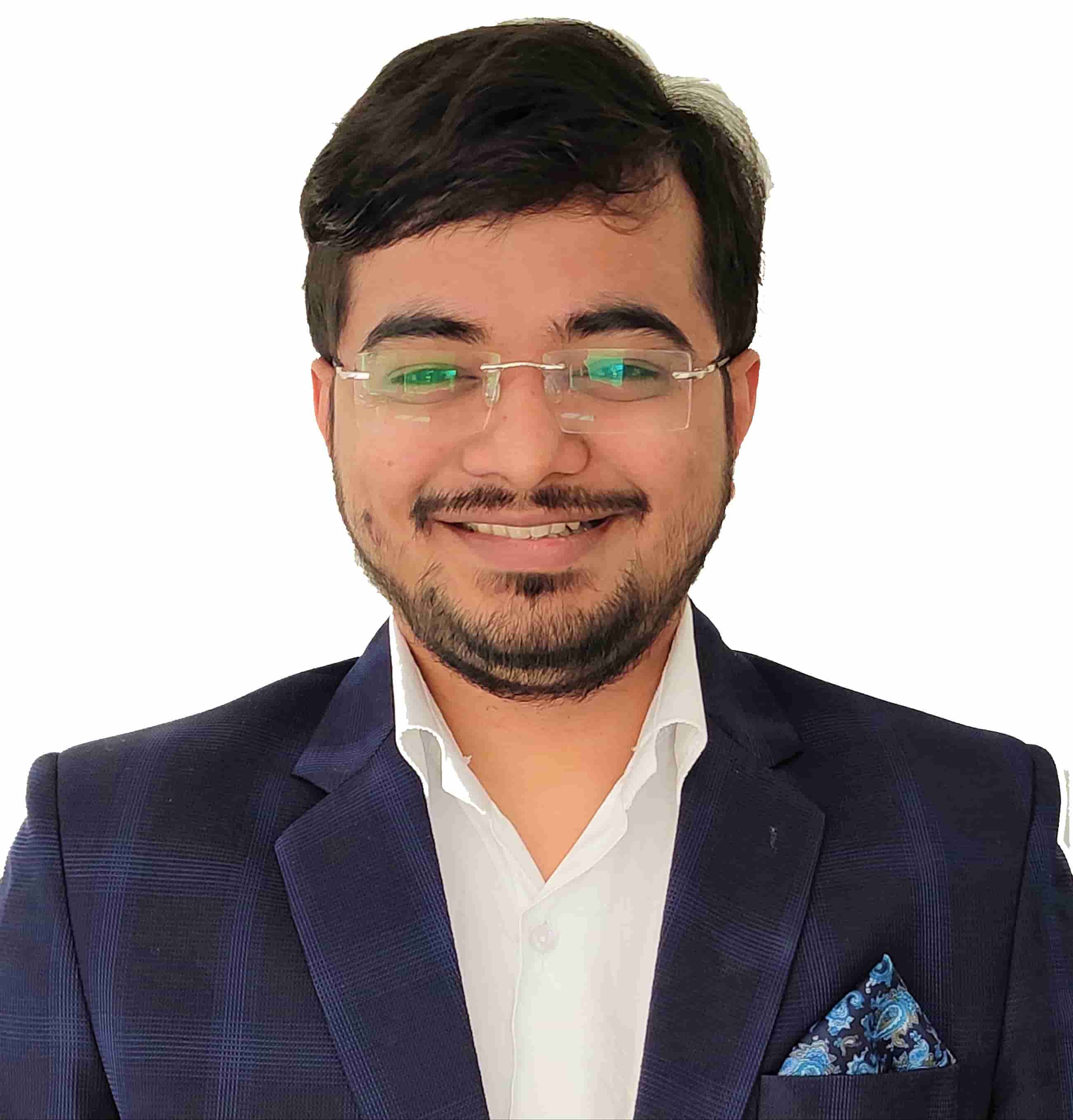
Ankit Jaiswal
Founder, Think Mile · guided 500+ Indian students
Germany’s EE industry is not spread thin across the country. It is concentrated in specific corridors that feed directly into university internship pipelines. Siemens and Infineon’s semiconductor manufacturing operations are anchored in Munich and Dresden. The Baden-Württemberg belt: Karlsruhe, Stuttgart, Mannheim: is where Bosch, Continental, and ABB run their R&D divisions. This geography matters because it means students at TUM, KIT, and TU Darmstadt are not applying to internships from a distance; they are walking into recruitment events hosted on campus by the same companies that sponsor lab equipment and thesis projects. From semester one, EE students at these universities have access to industry exposure that most programmes in India cannot replicate even through dedicated placement cells; TU Dresden now sits inside the Silicon Saxony cluster: Globalfoundries, the incoming TSMC/ESMC fab, and Infineon Dresden, and FAU Erlangen sits adjacent to Infineon's Neubiberg headquarters; Germany's European Chips Act commitments (€43bn, 2024–2030) make EE the most capital-backed engineering field in the country.
I work with a lot of Indian EE students, and the profile split is stark. Students who come from power systems, embedded systems, or VLSI backgrounds transfer well into German EE programmes, the curriculum overlap is high, and German professors value solid hardware fundamentals. Students from branches like ECE with heavy software electives sometimes need a bridging semester to get comfortable with analogue-heavy coursework at RWTH or TU Darmstadt. The counterintuitive thing is that students from mid-tier state universities with strong circuits lab training consistently outperform IIT students who specialised in ML in the first year of their German programme. German EE departments are training engineers, not data scientists. Your fundamentals matter more than your tier.
The SOP for EE is where I see the most wasted potential. German EE departments are not looking for a generic ‘I am passionate about electrical engineering’ statement. TU Darmstadt has a well-known embedded systems group. FAU has a strong power electronics lab. RWTH has one of the best RF and communications research faculties in Europe. Writing a single generic SOP and sending it to all seven universities is how you get rejected from all seven. Specifying a specialisation: power electronics, embedded systems, RF, photonics, MEMS, and naming two professors whose published work you have actually read is the difference between a shortlisted application and one that gets filtered in the first round. I have seen this work for students with 7.2 CGPA who got into TU Darmstadt over students with 8.0 CGPA who wrote a generic statement.
Common Mistakes Indian Applicants Make
Not checking German language requirement per programme, EE has the highest proportion of German-medium programmes among all STEM fields; applying to RWTH and TUM without B2 German wastes an application
Ignoring FAU Erlangen and TU Duisburg-Essen, two strong English-friendly programmes that Indian applicants consistently overlook in favour of the top-5 names
SOP that reads like an electronics shopping list: naming every project component (Arduino, STM32, oscilloscope readings) without connecting it to a research or industry problem the German department works on
A Student Who Did It
M
“I had almost given up on TU Darmstadt — I didn’t think my profile was strong enough to even apply.”
“TU Darmstadt was my dream university but I thought my profile wasn’t strong enough. Think Mile helped me craft a compelling application. Now I’m studying at one of Germany’s top technical universities!”
Moulshree Gaur·TU Darmstadt·MS Electrical Engineering
Dream University Admit
Read Next
Applying for this programme?
Book a free call, I've placed students in exactly this field.
I review profiles, help you shortlist the right 5–6 universities for your specific CGPA and background, and personally guide your SOP to avoid the mistakes I've seen reject hundreds of applications. No sales pitch, one honest conversation about your chances.